
🧠 The Neuroscience of Leadership: How Hypnosis Sharpens Decision-Making
(special thanks to Isabella Roy for help with this article.)
Great leaders don’t just make decisions—they make better decisions, even under pressure. But what fuels this clarity and confidence? The answer lies in neuroscience. While logic, experience, and emotional intelligence all play vital roles, one often-overlooked tool can significantly enhance leadership decision-making: hypnosis.
🔄 How the Brain Makes Decisions
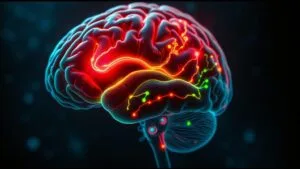
Decision-making isn’t just a rational process. It’s a complex dance between the prefrontal cortex—responsible for reasoning and impulse control—and the amygdala, which processes emotions. Add in neurotransmitters like dopamine (driving reward-seeking behavior) and serotonin (regulating mood and impulsivity), and it’s clear that decisions are as emotional as they are logical.
Leadership development programs for companies often explore these brain-based strategies, empowering leaders to make sound decisions that drive success. How can you leverage these insights to elevate your leadership impact?
Leaders often rely on mental shortcuts called heuristics to speed up choices. While useful, these can introduce cognitive biases like confirmation bias (favoring information that supports existing beliefs) or the availability heuristic (over-relying on recent memories). Under stress, cortisol floods the system, narrowing focus and pushing leaders toward reactive, short-sighted choices.
So how can leaders rise above these biological pitfalls? Enter hypnosis.
🧘♂️ Rewiring the Mind with Hypnosis
 Hypnosis isn’t about swinging pocket watches or losing control—it’s a focused, relaxed state that allows deeper access to the subconscious mind. In this state, the brain becomes highly suggestible, making it possible to identify and reframe hidden biases, limiting beliefs, and emotional triggers that sabotage leadership decisions.
For leaders, hypnosis offers three powerful advantages:
- Quiets Mental Noise
Daily distractions, stress, and self-doubt cloud judgment. Hypnosis helps leaders disconnect from external chaos and tune into their inner clarity. This mental stillness allows for more precise, intentional decision-making—especially in high-pressure moments. - Reframes Limiting Beliefs
Many leaders unknowingly operate under subconscious assumptions like “I’m not decisive enough” or “Failure is unacceptable.” Hypnosis can rewrite these narratives, replacing them with empowering beliefs that foster confidence, resilience, and bold action. - Neutralizes Emotional Bias
Emotions are essential, but unregulated ones lead to impulsive calls. Hypnosis promotes emotional regulation by calming the amygdala’s reactivity and strengthening prefrontal control. The result? Leaders stay centered, even when stakes are high.
💡 Hypnosis and Intuition: A Powerful Pair
Intuition—often called “gut instinct”—is actually the brain recognizing patterns from past experience faster than conscious thought can process. Seasoned leaders rely on this form of rapid cognition, especially when time is short or data is incomplete.
But here’s the catch: not all gut feelings are trustworthy. Intuition can be clouded by fear, bias, or stress. Hypnosis helps leaders distinguish true intuition from emotional noise by creating a calm mental baseline. In this state, the subconscious can surface authentic insights without interference from anxiety or ego.
By regularly practicing hypnosis, leaders train their brains to access intuitive wisdom more reliably—enhancing both speed and accuracy in decision-making.

🛠️ Practical Ways Leaders Can Use Hypnosis
You don’t need a stage hypnotist to benefit. Modern, evidence-based hypnosis can be integrated into leadership development through:
- Guided audio sessions focused on confidence, clarity, or stress resilience
- One-on-one sessions with certified hypnotherapists to address specific leadership challenges
- Self-hypnosis techniques practiced daily to reinforce positive mental frameworks
Even 10–15 minutes a day can strengthen neural pathways associated with calm, focus, and self-trust.
🌱 Building a Hypnosis-Enhanced Leadership Routine
To maximize benefits, pair hypnosis with other neuroscience-backed habits:
- Pause before deciding: A brief moment of reflection lowers cortisol and activates the prefrontal cortex.
- Seek diverse input: Counteract confirmation bias by actively listening to dissenting views.
- Practice mindfulness: Like hypnosis, mindfulness boosts emotional regulation and focus.
- Test your intuition: Use gut feelings as a starting point—but validate them with data and feedback.
Hypnosis amplifies all these strategies by preparing the mind to receive, process, and act on information more effectively.
🌟 Lead with Clarity, Confidence, and Calm
Leadership isn’t about having all the answers—it’s about making the best possible choices with the information you have, even amid uncertainty. Neuroscience shows us that the brain is malleable, and with the right tools, we can rewire it for better judgment, emotional balance, and intuitive insight.
Hypnosis is not a magic fix—but it is a powerful catalyst for mental clarity and confidence. By accessing the subconscious mind, leaders can dissolve hidden barriers, reduce stress-driven reactions, and align their decisions with their highest intentions.
In a world that demands agile, empathetic, and decisive leadership, hypnosis offers a quiet edge: the ability to lead from a place of deep inner calm, where clarity and confidence naturally arise.
So the next time you face a tough call, consider closing your eyes, taking a breath, and tapping into the subconscious intelligence that’s been there all along—waiting to guide you forward. 🧠✨
🚀 Conclusion: Lead From a Transformed Mind
The science of leadership shows that excellent decision-making is not luck or personality — it is trainable brain performance. Combining neuroscience-based awareness with hypnosis enables leaders to break unconscious limitations, eliminate fear-based responses, increase clarity, strengthen confidence, and lead with composure.
Leaders who master their inner world automatically rise in their outer world.


